It only took three hours
Humanoid robots used to cost a fortune. Now you can get one for the price of a coffee machine. A fancy one, but still.
Over the last few years, humanoids have been popping up everywhere, in the news, on social media, at tech events. Prices have become almost accessible. You can now buy small humanoids for $4,900 to $13,500 at Unitree. In the US, you can even rent a humanoid for $500 a month to handle household tasks at 1X.
I was looking for something new to crack. The more I read about what people were doing with robots, the more I thought: let's try to build our own humanoid robot. I had no experience in mechanics or electrical circuits. The closest I ever got was buying the right parts and assembling my own computer when I was fifteen.
As I was looking into how to make this work, luck came knocking at my door. Hugging Face, who had just acquired Pollen Robotics, announced the release of their new affordable robot: Reachy Mini ($299 or $449). This would help me start the journey as it handles the brain, which seemed to be one of my biggest challenges.
In October 2025, I received my first two robots*. The first one is a pair of arms called SO-101, printed and assembled in China before being shipped to me. The second is Reachy Mini, bought from Hugging Face. A small robot with two eyes, a white body, and two antennas. I have to say, the designers did a great job. Everyone who has seen my Reachy describes it spontaneously as cute.
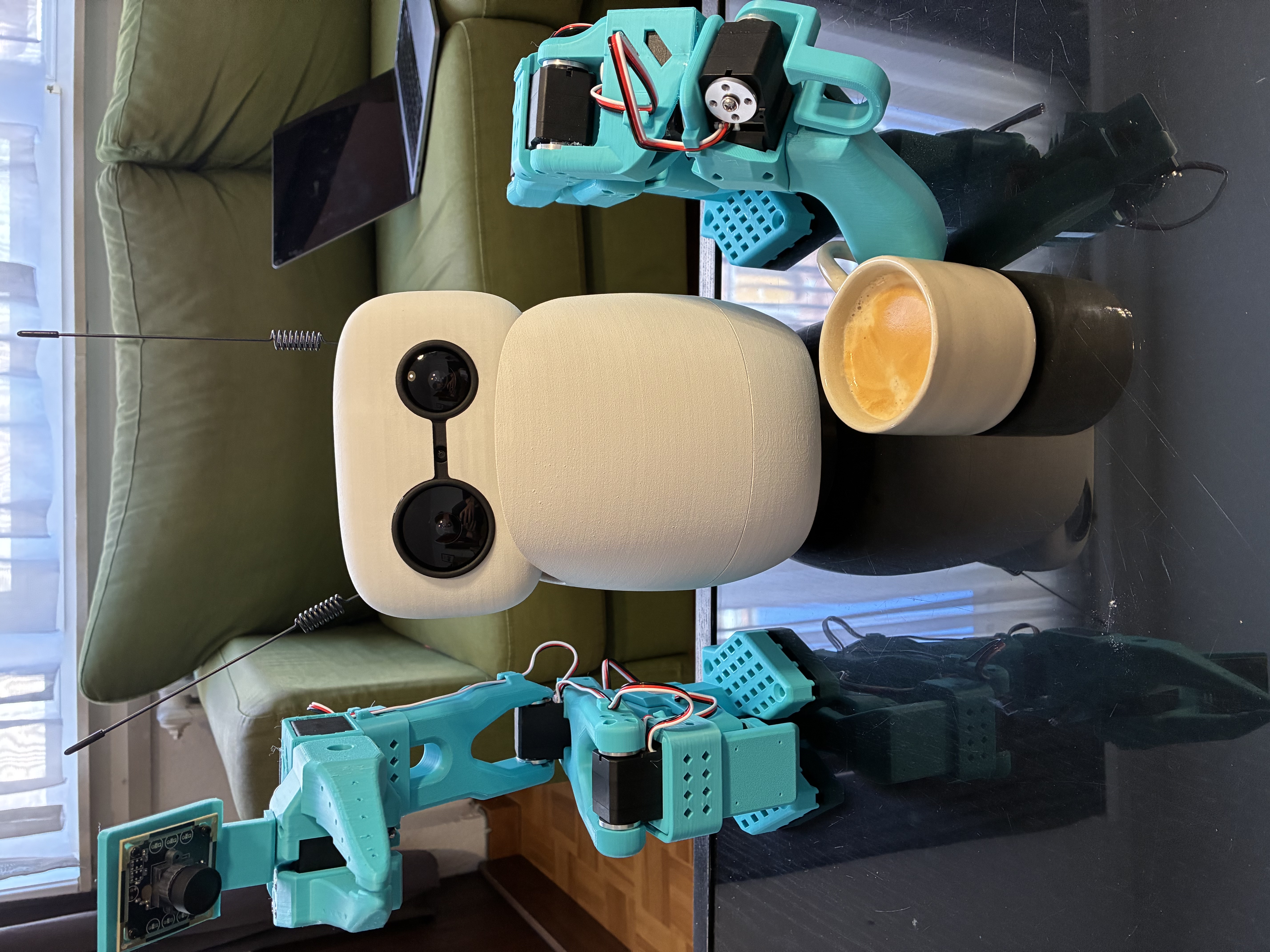
The SO-101 arms arrived ready to use. Not much for me to do. Reachy Mini was different. That one, I had to assemble myself.
I expected it to be complex. It was the opposite. Inside the box, everything was well organised. The assembly book looked like a plan for building a Lego car, or an IKEA manual (except easier, less confusing, and with spare parts included!).
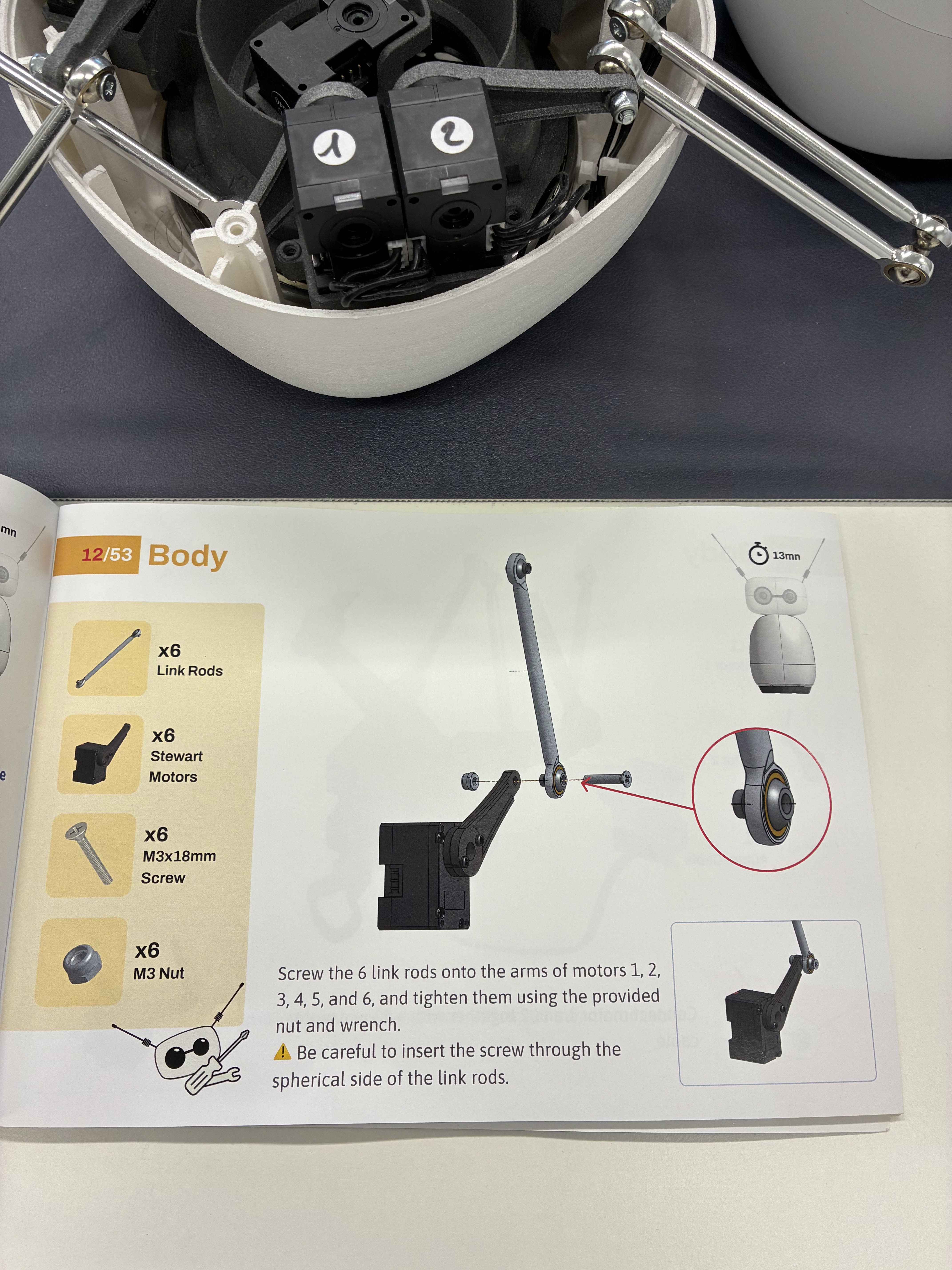
So now we have a cute head and two arms. How do we make them move and speak?
Both guides to bring them alive were made by Hugging Face. The process was simple and effective: I connected the cables to my laptop, a few clicks, and there we go. The arms moved. Reachy moved his head and could talk with us. Victory!
I did not believe that in three hours I would have robotic arms moving and a robotic head watching me and talking to me. To be clear, Reachy did not yet control the arms. Those were still two separate systems.
Up to this point, what we did is accessible to anyone. I only had to purchase the materials, read the assembly plan, and follow the steps.
From here, we have two paths to choose from.
The first is simple: use applications built by other people and try to make your own small apps with tools provided by the community. You can find all public apps here, there is already quite a lot you can do out of the box.
The second is to build your own applications by diving into the code.
Thanks to the growing community and the great tools provided by Hugging Face, I expect the first option to be more than enough for anyone willing to experiment with robots. As I love trying new things, I'll go with both: relying on the work of others, and building my own apps that I will share afterwards.
It has been a few months now since I got my first robots. I added two more Reachy Minis to the team.
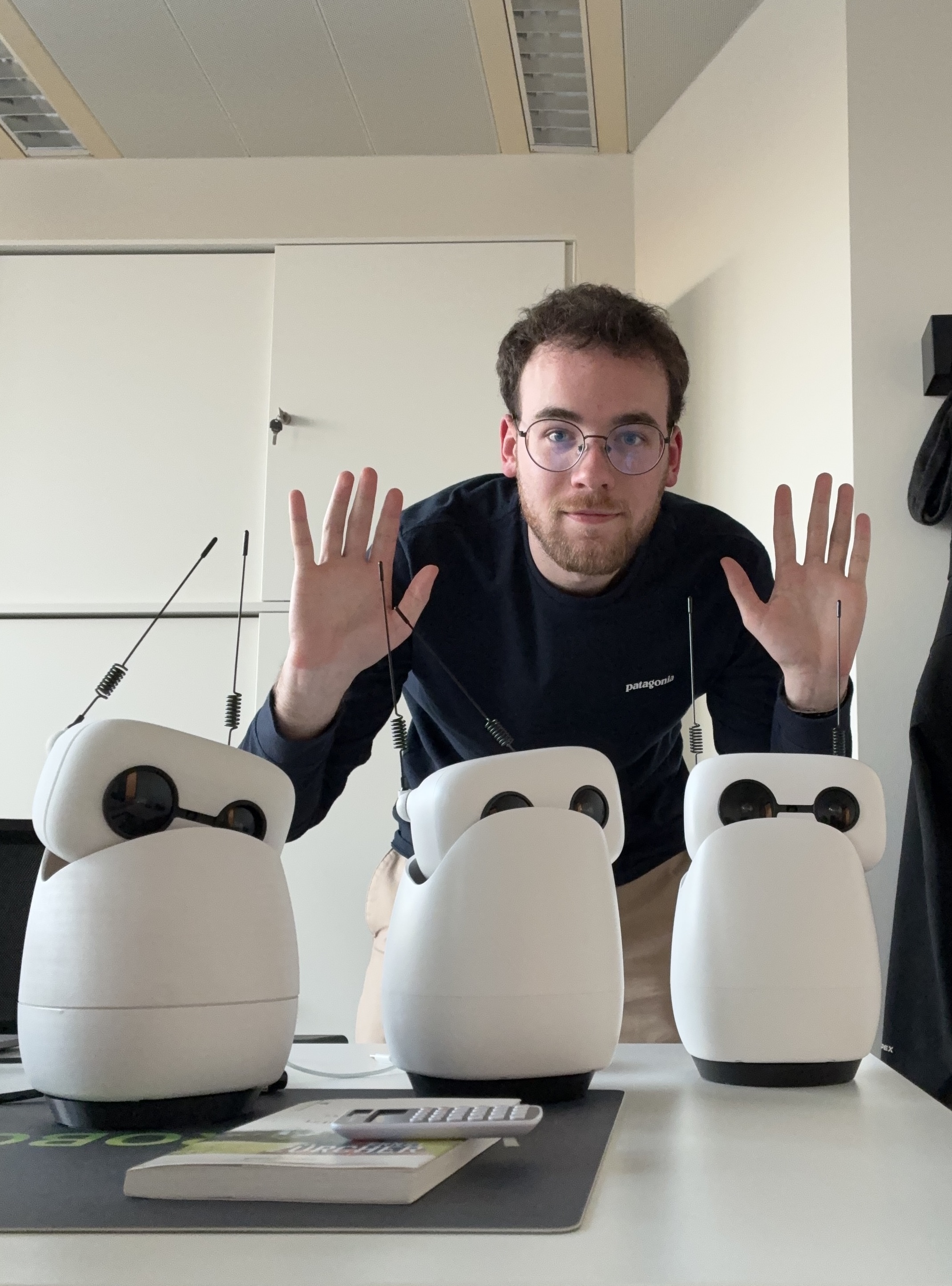
Together, we went around and showed Reachy to pre-school kids (they loved it!), university students, and dozens of adults. Kids wonder why Reachy does not have legs, or what his name is. Adults love testing its humour and language skills. Where everyone acts the same is when they mention that Reachy is kind and cute! However, adults always end up saying that they'd really like a robot that does their household chores, their dishes... instead of just a head talking to them. But is that really what people want?
Before moving on to the next steps of our humanoid-robot building, I need to come back to something. Reachy Mini is the product name given by the Hugging Face/Pollen Robotics team. I have three of them, which makes it difficult to experiment if they cannot be differentiated. It is also one of the first questions everyone asks: "What is their name?"
So I would like to set up a first experiment.
I will work on allowing each Reachy to store memories of its conversations with us. By giving a different Large Language Model (the models behind e.g. your ChatGPT, Claude, or Mistral subscriptions) as brain to each of the three Reachys, and by letting them build and manage their own memory over two or three weeks, I expect all three to behave slightly differently. Then, I would like to give them the choice to pick their own names once they have developed a light personality. I will explain this in more detail in a next blog post at the end of the experiment. Meanwhile, I encourage you to suggest a few names for them to choose from when they are ready!
*There are several proposals for the definition of the term "robot." For the sake of simplicity, I will consider a robot to be something that (1) can do more than one thing, (2) is composed of several motors, and (3) can be programmed to perform a series of actions in the physical world automatically.